Sunday, April 10, 2016

Shri Nageshwar

This is the eighth in the series of twelve Jyotirlingas. The manifestation of Nageshwar Jyotirlinga has three distinct school of thoughts as stated in the Puranas. Hence there is a controversy over location of Nageshwar Jyotirlinga.

As per first school of thought, Naganath at Aundha in Prabhasha-Kshetra in Maharashtra is considered as Nageshwar jyotirlinga. As per second school of thought, Jageshwar at Almorha in Uttarakhand and as per third school of thought, Dwarka in Gujarath. 

According to Kshetra-Puran, the pandavas during their aranynavas (exile), came to Aundha. During their visit to Aundha forest, Bhima discovered that the cows used to go to the river bank for drinking water and there the milk used to flow automatically from their udder. He tried to dig at that place with his mace. After digging for some time, he came across blood gushing out of a Shivalinga of extreme radiance (Jyotirlinga). In this manner the Nageshwar Jyotirlinga was discovered. 

Another legend states that when Saint Namdev was singing in Aundha, the Brahmin priest asked him to go away as he felt that Namdev was disturbing their routine. Namdev and his followers went to the back side of the temple and sang bhajans. Due to this the entire temple turned back. As a testimonial to this miracle, Nandi is located at the back of this temple. 

The school of thought about Dwarka in Gujarat says that the Nageshwar linga located here is one of the Jyotirlingas. The demon Daruka and Daruki did severe penance and obtained a boom from Parvati that wherever they travel, the forest will travel with them. The demons used to harass the hermits by destroying their yagna and penance. Hermits sought refuge with Orva muni who cursed the demons that they will be destroyed on earth. The demons lifted the entire forest and put it in the middle of the sea. They started harassing the merchants traveling with their ships and imprisoned them in the islands. A hermit named Supriya, also a prisoner, prayed to Lord Shiva. Lord Shiva answered his prayers and destroyed all the demons. Parvati granted a boon to Daruka that at the end of the era, only demons will be created on this island and Parvati will rule over them. Shiva and Parvati stayed on the island. Lord Shiva assumed the form of Jyotirlinga Nageshwar and Parvati as Nageshwari on the sea coast. 

The third legend pertains to Bala Jageshwar Jyotirlinga at Daruk-vana at Almorha. Here Lord Shiva appeared as Jyotirlinga due to the penance of Balakhilyas (dwarf maharishis). The main mantra that is recited at this temple is “Tryambakam Yajamahe Sugandhim Pushtivardhanam Urvarukamiva Bandhanaan Mrityor MukshiyaMaamritaat” (Maha Mritunjay jaap) (we pray to Mahadeva whose eyes are Sun, Moon and the Fire, may he protect us from disease, poverty and fear and bless us with prosperity and longevity).


Sunday, March 27, 2016

Shri Kashi Vishwanath

This temple is located at Varanasi in Uttar Pradesh on the sangam of rivers where Varana and Assi rivers join river Ganga. Varanasi is supposed to be founded by lord Shiva 1000s of year ago. It has a lot of legends associated with it. It is one of the most sacred pilgrimage centers. A tribe known as Kasha used to live here hence it is named as ‘Kashi’. 

Kashi Puran mentions that Purusha (Man) and Prakruti (Nature) (Shiva and Shakti) were ordained by Lord Shiva to perform tapas in the universe to create best being at a specified place. Nirgun Shiva created a city called PanchaKoshi. Vishnu did tapas at this place and hence a number of water springs originated. As Lord Vishnu was admiring this, a gemstone fell from his ear. Hence this place was called ManiKarnika. All the water in this panchakoshi was gathered in his trident by Lord Shiva. Then Bramha was born on the Lotus flower from the navel of Lord Vishnu. Bramha created this world as ordained by Shiva. According to purana, this world has 50 crore Yojanas of area and 14 lokas. In order to save life of those bound by karma, Shiva kept Panchakoshi city away from the entire universe. In this city he established the MuktiDayak Jyotirlinga. Shiva removed Kashi from his trident and set it on this mortal world. So Kashi is known as Vimukta-Kshetra. The Avimukteshwar linga is in Kashi. This city is ruled by Bramha, Vishnu and Mahesh according to legends. It is a belief that those who live in Kashi attain Mukti. According to another legend, the city is guarded by Dandapani and KalaBhairav. Hence it will not get destroyed during Pralay. On the banks of Ganga there are 84 bathing ghats and innumerable tirtha kundas which are supposed to exist from Vedic period. 

There is also another legend associated with this place from puran. Brahma made a great tapasya at a spot in Kasi. Once Brahma recited veda in praise of Lord Shiva. He recited a stanza in a misleading and a wrong way. For this mistake Shiva sliced one of his heads. This head found a lasting place known as Brahmakunda. 

Varanasi is also one of the Shakti peetha where Devi’s one of earrings fell. At this place we have the string of Devi VishalAkshi. During a long spell of famine in Kasi, Devi served food to all. At this place we have the shrine of Annapurna Devi. Mahadeva as a beggar was also a beneficiary of this food served by the Devi. Lord Shiva had to beg for alms to atone sin of Brahmahatya. Due to Brahmahatya Brahma's skull got stuck in Lord Shiva's left palm (BrahmKapala). This skull fall off when Lord Shiva received alms from Devi. 

Harishchandra ghat is the place where Raja Harishchandra was posted as a slave at the smashaan (cremation place). 

Varanasi was also plundered by Moguls a number of times and the shrine of Lord Vishwanath was destroyed. It was rebuilt later during the Maratha and Rajput period.


Sunday, March 20, 2016

Shri Bhimashankar

Bhimashankar is one of the 5 jyotirlingas located in Maharashtra. It is located in Sahyadri hills, about 125 km from Pune, in Maharashtra.

According to Shiva Purana a demon named “Tripura” performed severe penance. All the Devas were disturbed by his penance and felt that he (Tripura) may become all powerful if he receives the boons he wished. They approached Devendra, who tried to stop the penance of Tripura. Before Indra could achieve this, Tripura had already conquered the Anger, Ego, lust, greed, envy etc by his tapas. Indra and gods approached Brahma for help. Assuring them of help Brahma came to the place where Tripura was performing his tapas. He offered his blessings to Tripura and granted him boons namely -   1) He will not be killed by Devas or Asuras or Yakshas etc. 2) He should get the power to travel to all worlds through air and water. 3) There should be nothing in the world that he cannot conquer including Indra and Amaravati. Besides granting 3 boons Brahma also gave one more on his own that he will be killed only when a person pierces his (Tripura) 3 sides with a single arrow.

Once Tripura was bestowed with these boons, he started troubling one and all, disturbed yagnas and insulted Brahmins. Hence the Rishis and Devas along with Indra started a penance to please Lord Shiva. Lord Shiva told Indra that if he performed Tapascharya at the foot of Sahyadri hills in front of his jyotirlinga, he will help in killing Tripura. When Indra was able to please Shiva by his tough penance, Shiva promised Indra to kill Tripura in 7 days.

Shiva appeared as big giant person mounted on his vehicle Nandi, with Trishul, drum (Damaru) and surrounded by his Devaganas, along with yoginis (Dakini and Shakini). At this juncture he resembled as one of the Pandava brothers namely Bhima. Hence Lord Shiva got the name Bhimashankar. He was able to kill Tripura and at the request of Devas and Rishis he stayed and thenceforth called Bhimashankar.

The temple at this place is very old dating back to several hundred years. The great Maratha king Chatrapati Shivaji is said to have made endowments to this temple for maintenance and worship. The Peshwa minister Nana Phadnavis is said to have done rebuilding of Shikhar of this temple.

The river Bhima has origin here. According to the legend during the war between Tripura and Bhimashankar, the sweat flowed from the body of Bhimashankar and formed the river Bhima. Parvati as Gauri came to the aid of Shankar during the war, mounted on Lion, she killed Tarakasur in the fight. The Devas and Rishis worshipped her with lotus flower and hence she is worshipped here as “Kamalaja”.

Shakini, Dakini and Shivaganas, who helped Shiva on the battle against demons, are also honored and worshipped here.

The Mokshakundatirtha is behind Bhimashankar temple and it is associated with Kaushik Rishi who worshipped the lord here. Besides this there are 2 more tirthas namely Sarvatirtha, Kusharanya tirtha and Jnyanakund. The river Bhima starts flowing towards east from Kusharanya tirtha.

Mahashivaratri and Mondays in Shravan month are considered as most important days for worship of Lord Shiva here.


Sunday, March 13, 2016

Shri Kedareshwar

Kedarnath in Uttarkhand is the closest Jyotirlinga to Mount Kailash. It is surrounded by snow clad Himalayas at a height of about 3590 meters (10,500 ft). It is a part of Chaar Dhaam yatra. It is rich in legend and tradition. It is accessible for only six month in a year. It is one of the 275 Padal Petra Sthalams (places that were praised by scared hymns). 

There are various stories about formation of this Linga. 

As per one story Nara and Narayana, two incarnations of Lord Vishnu, performed severe penance by meditating on Lord Shiva. Pleased with their penance Lord Shiva asked them to ask for boon. Nara and Narayana requested Lord Shiva to take the permanent form of Jyotirlinga so that anybody who worships that Linga will be freed from all miseries. 

As per another story Pandavas performed penance and meditated on Lord Shiva for the welfare of humanity. Pleased with their penance, Lord Shiva manifested as Swayambhu Linga - lord Kedareshwar (a large expanse of black stone). 

According to another legend, Lord Shiva wishing to elude the Pandavas during their final journey, came to Kedarnath as bull (or wild boar). The Pandavas reached Kedarnath temple and Bhima tried to pull the tail of the bull and failed, leaving a hump. It is presumed that the bull went straight to Nepal and formed PashuPatiNath. On this hind part, Mahesha appeared as Jyotirlinga. Lord Shiva promised to remain there as a triangular shaped Jyotirlinga. The mountain top where the Pandavas went to Swarga is located off Badrinath. It is believed that Bhima massaged Lord Shiva with Ghee after his fight. Hence there is a practice to massage the triangular Jyotirlinga with Ghee. According to another legend, Nara-Narayan went to Badri village and started worship of Parthivalinga. Shiva appeared before them full-filling their wish, Mahesha stayed at Kedar at Jyotirlinga and he is known as Kedareshwar. It is believed that AdiShankara attained his Moksha on the mountain top. Around Kedarnath temple there are many holy places. 

Location - height of 3583 meters, 223 KM from Rishikesh on the shores of Mandakini river, a tributary of Ganges.


Saturday, March 5, 2016

Shri Omkareshwar

Omkareshwar is one of the 12 jyotirlingas. It is situated on the banks of river Narmada on Mandhata (Shivapuri) island in Madhya Pradesh. The island has shape of Om. There are a number of legends attached to this place, of these three are considered to be very prominent. 

Once Narada provoked Vindhya Parvat stating that Mount Meru was greater than Vindhya Parvat. Though Vindhya mountain was tall it was not as great as Meru. This made Vindhya jealous of Meru. In order to become greater, Vindhya practiced severe Tapasya and worshipped Parvat Linga. As a result of this Tapasya, Lord Shiva granted request of Vindhya parvat to establish a Shiva Linga on the banks of river Narmada. At the request of Devas and Rishis, he made two part of the Linga. One half is called Omkareshwar and the other is known Mamleshwar (or Amareshwar). In this manner, Jyotirlinga Omkareshwar came into existence. Also, Shiva granted a boon for the Parvat to grow with a promise that it will not hinder his devotees from crossing over. Puffed by Shiva’s boon, Vindhya parvat started growing. It obstructed even the Sun and the Moon. Hence Devi Bhagawati sent Sage Agatsya along with his wife to stop Vindhya parvat from growing. Agatsya rishi convinced Vindhya parvat and got a promise that it will not grow till Sage Agastya returns from the south. They never returned and stayed at SriSailam, which is considered as Dakshin-Kashi. 

The second story relates to King Mandhata of Ikshvaku clan (Lord Rama also belonged to this clan). He worshiped Lord Shiva at this place till Lord Shiva manifested as Jyotirlinga. It is also believed that the sons of King Mandhata did severe penance and austerities and pleased Lord Shiva. Hence the mountain peak is known as Mandhata Mountains.

The third story states that, in a war between Devas and Asuras the Asuras were victorious. The Devas made severe penance and pleased lord Shiva. Lord Shiva manifested as Omkareshwar Jyotirlinga and defeated the Asuras.


Thursday, February 25, 2016

Shri Mahakaleshwar

This is one of the 12 Jyotirlingas located at Ujjain in Madhya Pradesh. It is believed to be swayambhoo linga. It is very difficult to estimate when this temple was built. It finds reference dating back to 5th century. The idol of Mahakaleshwar is Dakshinamurti, meaning facing south. It is an unique feature upheld by Tantri Shiva Netra tradition. Shiva Netra is a sacred dialogue between Lord Shiva and Mother Parvati. This place is revered as one of the Shakti peethas. Ujjain was formerly known as Avanti and we can find many references to it in Puranas. This is the place where poet Kalidasa has wrote his famous works. After 1234/35 A.D. the structure was rebuilt as the earlier structures were destroyed by Mughal invaders. The present temple was maintained by the Maratha kings of Gwalior.

There are number of legends connected with this temple. According to the Puranas, a ruler of Ujjain known as Chandrasena worshiped Lord Shiva. A boy named Shrikhar was attracted by the King's worship. When he tried to enter the palace he was prevented by the guards and they sent him to the banks of river Kshipra outside the city. When the kingdom was attacked by invaders, Shrikhar and priest named Vidhi prayed Lord Shiva on the banks of Kshipra river and Lord Shiva appeared in the form of Mahakala and destroyed the enemies. Lord Shiva manifested here as a Swayambhoo linga. This Jyotirlinga is maintained by Tantrik Principle.  

Till date, the custom of Bhasmabhishek is performed in this temple on early morning of every day. Bhasma (sacred ash) for abhisheka is collected from the funeral pyre of first cremated body in the day and then it is purified by mantra and sacred water of river Shipra before using for abhisheka. 

There are caves which are known as Bhartrihari caves. Sage Bhartrihari was a step brother of Raja Vikramaditya. It is believed that he performed meditation here after renouncing worldly life. 

The Kalabhairava idol in the nearby temple accepts half of any intoxicating liquid and leaves behind the other half as Prasad. 

Ujjain is one of the 7 mukti-sthalas.


Thursday, February 18, 2016

Shri Shailam

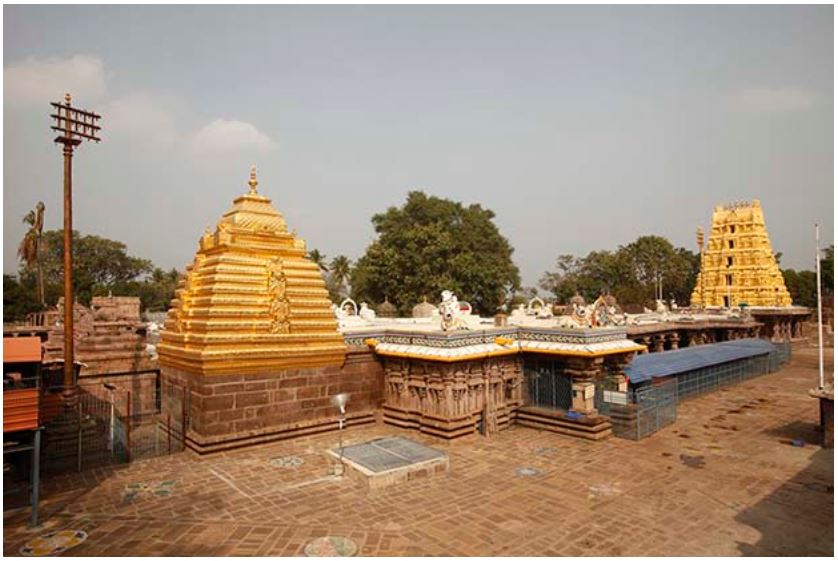
This is one of the twelve Jyotirlingas. The temple of Lord Mallikarjuna is on the top of Nallamala hills in Kurnool district, Andhra Pradesh. Its on the bank of river Krishna about 210 km south of Hyderabad. This place was known earlier as Srigiri. The Bhramaramba temple located here is one of the shaktipeethas. This is one of the 275 Paadal Petra Sthalam. It dates back to about 1 A.D.

Lord Shiva and Pravati appeared here as Mallikarjuna and Bhramaramba. As the story goes, upon disagreement with his parents and his brother Lord Ganesh over circumambulation around earth (bhu-pradakshina), Kartikeya left for tapasya on the Krouncha mountain. Shiva and Parvati tried to reach Kartikeya to pacify him. But Kartikeya left for another mountain close by. On the request of Devas, Kartikeya stayed close by. According to the legend, Lord Shiva visits Lord Kartikeya on every Amavasya and Parvati visits him every Pournima at this place.

Parvati took avatar as Bhramaramba (bees all over her body) to kill Mahishasura. It is stated in Puranas that Lord Shiva as Mallikarjuna and Parvati as Bhramaramba obliged Vrishabha Deva by giving darshan in appreciation of his tapasya at this place. Lord Rama installed a Sahasra Linga and Pandavas installed Pancha-pandava Linga here.

Adi Shakaracharya is stated to have scripted his memorable work Shivanand Lahari at this place.

Paadal Petra Sthalams - There are 275 Shiva temples that are revered in the hymns composed by 63 Shaiva Nayanmars (known as Shaiva siddhas) in the 6-9th century. These 275 temples are considered to be the greatest among the Shiva temples. Similarly there are 108 Vishnu temples glorified by hymns. These are known as Divya Desams. These places were glorified by Vaishnav sidhantas known as Vaishnav alwars.